
 By
By Huawei promised phones at MWC and they delivered: for Android it arrived in the form of the Huawei U8800. The main highlight of this particular device is its HSPA+ connectivity allowing 14Mbps data speeds, essentially meaning you could download a 1GB file in less than a minute and a half. To benefit from that capability though, you’ll need to have a carrier that supports the HSPA+ standard.
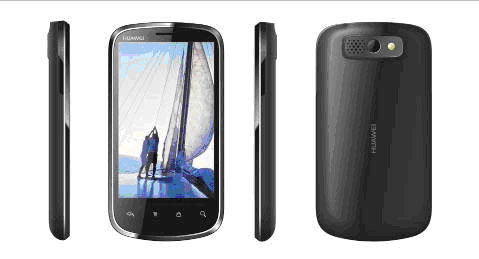
The design is simple and sleek although the above picture isn’t exactly “clear” – I’m sure more press pics will follow. Other highlights of the hardware include Android 2.1 and a 3.8-inch touchscreen.
Here is the full press release:
Huawei to Launch World’s First HSPA+ Android Smartphone
Company showcases four additional Android™-based devices at Mobile World Congress[Barcelona, Spain, February 15, 2010] Huawei, a leader in providing next-generation telecommunications network solutions for operators around the world, today showcased the world’s first HSPA+ smartphone powered by Android at the GSMA Mobile World Congress in Barcelona. The U8800 smartphone will be commercially available in the third quarter of 2010, and able to support high-speed Internet access, which is faster than existing 3G smartphones.
The U8800 uses the Android 2.1 operating system, and integrates HSPA+ capabilities to support downlink speeds of up to 14 Mb/s. This speed allows users to download a 400Mb feature-length movie within thirty seconds. The smartphone will feature a 3.8-inch wide screen, providing users with a broader field of vision and allowing them to take full advantage of a multitude of features and Internet applications.
Kevin Tao, CEO, Huawei Device, said: “The customized Android smartphones reflect our long-term investment to develop high-end devices which enable operators to deliver enhanced and differentiated mobile services. Android being open to third party programs means that operators can add a number of various applications to the phone. The U8800 enables operators to provide tailor-made, stylish and affordable smartphones to their subscribers.”
Yet another Android victory at MWC!
[Via Press Release]






Someone’s math needs a little work on downloading a 1GB file. 1 GB file = 1024 MB * 8 bits/byte= 8192 Mb /14 Mbs = 585 s which is a little closer to 10 minutes theoretically
Yeah, nlinux is right…don’t forget we’re talking about Mega-BITS per second, not Megabytes. Still nice to see double the bandwidth of current “top of the line” phones.
At full speed you are looking at times of 9 and a half minutes plus for an ~1GB file.
Tmobile HSPA+
Funny how T-Mobile has already announced that most of their current 3G phones will work with their HSPA+ network. So someone kindly tell me how this is the “First HSPA+ phone”
I’m assuming that they should have titled it the first phone to support up to 14mbps download. Because if I take my N1 onto the HSPA+ network HTC states:
HSDPA/WCDMA:
900/AWS/2100 MHz
Up to 2 Mbps up-link and 7.2 Mbps down-link speeds
7.2/2 is good enough for me. Most phones’ browsers wont even be able to load that fast because of the RAM limitations anyway.
said first android phone… readddd
Covert, I thought my Cliq is supposed to be HSPA ready. Is there a difference with the +?
See that’s what I am talking about. I commented before seeing this.But I am definately gonna get this to go with my pulse also, the Canvas UI is pretty sweet if you have never had the luxury of using it.
Listen guys if you know how to do the math 1Mbps = .125MBps which means that 1Megabyte would take 8 seconds to download. Do the math. To download 1Gigabyte it would take 2.2 hours approx at full speed.
@Mike you’ve got a point. Pulled this from webhostingtalk:
There are 1000 bits in a kilobit and 1000 kilobits in a megabit.
Therefore, there are 1 million bits in a megabit.
The conversion from bytes to bits works like this, and beware, this is long handed…
1 byte (B) = 8 bits (b)
Since we are dealing in 1 million bytes or bits ( mega ) we will apply the same conversion.
10 megabytes = 80 megabits
A 1 megabit per second connection can transfer 60 megabits in a minute and 80 megabits in 1 minute and 20 seconds.
Since 10 Megabytes is 80 megabits, we can transfer 10 megabytes over a 1 megabit connection in 1 minute and 20 seconds.
This of course does not factor in anything but the pure math. This leaves out network overhead, distance, the speed of
the opposite connection, etc
Now, save yourself some time and use a calculator :-)
http://www.easycalculation.com/bandwidth-calculator.php
To equate this to your 4 megabit connection, 4 megabits is 4000 kilobits so you can handle approx. ( 31.25 ) 128 kilobit streams.
Again, this doesn’t factor in anything but the speed rating.
@Mike’s math may need more work than the original Huawei post, but to their credit they do seem to indicate a 400 Mbit feature length movie, which is kind of weird in itself. 2.2 hours? seriously?
Transport speed does not equal throughput. If it did we would all be getting 300MB/s throughput from our SATA II hard drives and SSDs would be pointless.
The question of what time will it actually take to send or receive a 1MB file will only be answered when these thingys are in the wild and are clocked sending/receiving data while connected to actual infrastructure.
My dream phone is not a portable WIMAX bridged to a 2.4Ghz 802.11b/g hotspot with only 3 available WiFi channels but instead I want HSPDC+ bridged to to 5 Ghz 802.11n hotspot. Until then I guess I’ll tether.